
Cover · Cover design
What goes on a book back cover: layout, blurb and barcode
October 1, 2026 · 6 min read
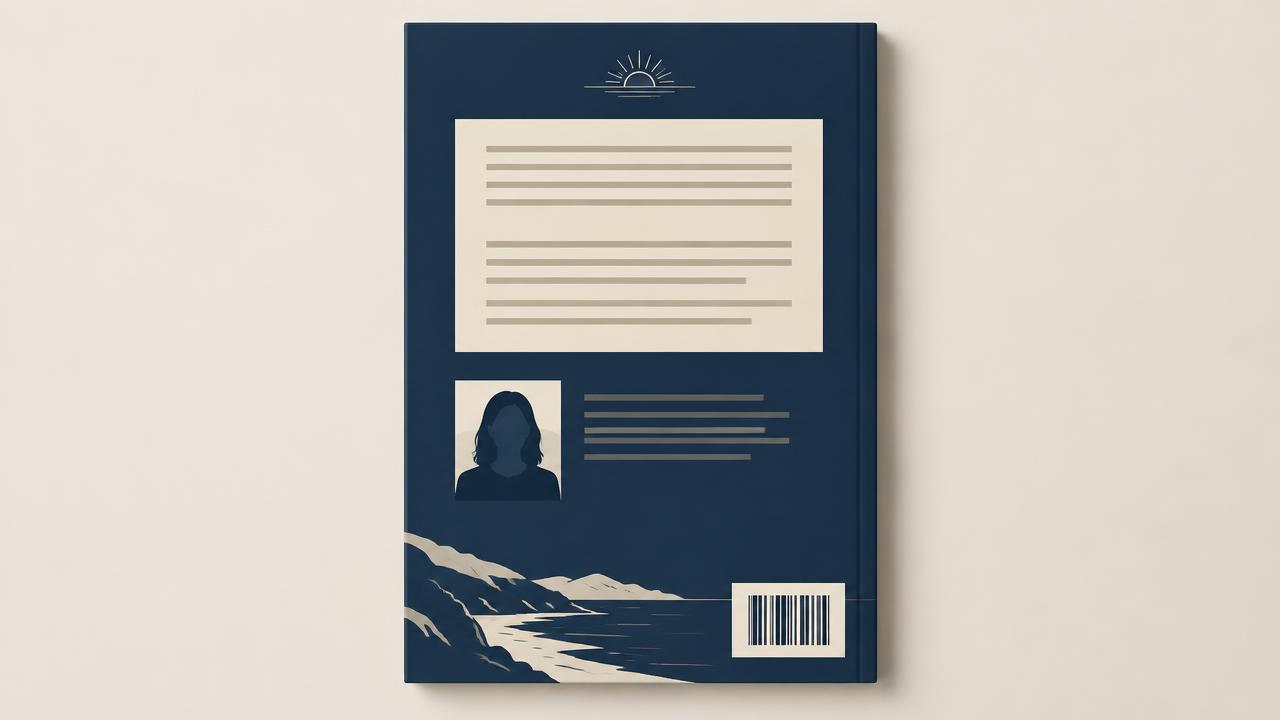
The back cover is a sales page you hold in your hand. A browser who flips the book over gives it a few seconds, so everything on it should help them decide to read the first page.
Lead with a hook line: one sentence that sets up the core tension or promise. Below it, a blurb of roughly 100 to 200 words — enough to establish the protagonist or problem, the stakes and the question the book answers, without summarizing the ending.
Social proof comes next if you have it: a short review quote or an award. One strong quote beats four weak ones. Never invent or paraphrase a quote into something the reviewer did not say.
A short author bio and photo are optional on fiction and more useful on non-fiction, where credibility sells. Keep the bio to two or three lines focused on why you are the person to write this book.
Leave the barcode area clear. KDP places the ISBN barcode in the lower right of the back cover in a box about 2 x 1.2 inches. If text or important art sits there, it will be covered. You can supply your own barcode instead, but it must still meet KDP's placement and quiet-zone requirements.
Respect the safe zone. Keep all text at least 0.125 inches inside the trim line and well clear of the spine fold. Back-cover text that runs into the bleed is one of the most common reasons a cover fails KDP's print review.
Design for legibility, not decoration. Body text on a busy image is hard to read in print. Use a solid or softened panel behind the blurb, and keep the type at a comfortable reading size.
Manucheck's Cover Analyzer checks full-wrap covers for text in the bleed, the barcode zone and spine clearance, and its blurb review flags claims KDP's content guidelines do not allow.
Check your own manuscript
Run a full analysis on your first manuscript free and see exactly which of these issues your book has.
Start free analysis